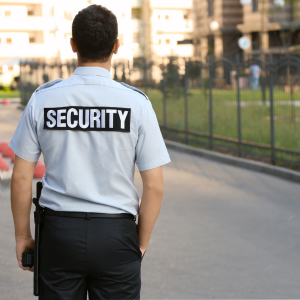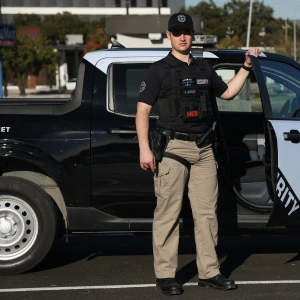
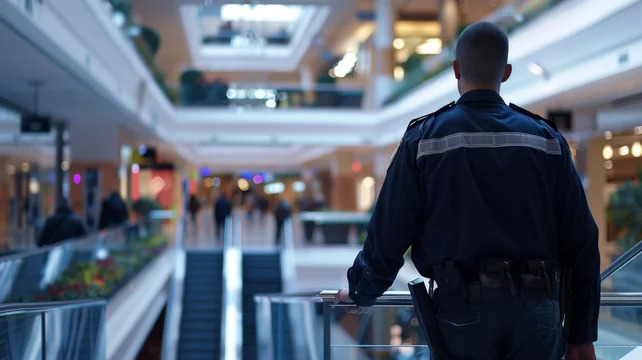
In the world of safety management, emergency personnel are expected to check their surroundings and minimize dangers by helping to maintain some degrees of order onsite. Supervised structures at public places, private properties, industrial plants and residential areas can be structured to prevent disturbances. This protective environment is sustained by the security guard and supports preventive measures that he/she must maintain in order to see, hear and be seen. Continuing professional supervision is still a very significant component in consolidating confidence, with different settings.
Daily Observation Duties
A key component in creating and sustaining safe and orderly surroundings is consistent monitoring. Security staff often watch people entering and exiting as well as the area around them for any odd behavior. By observing well, uncertainty is minimised since problems are identified in the early stages, thereby avoiding the escalation of disruption. In places that have a clear structure for supervision, regular awareness practices can help to maintain better environmental conditions and to facilitate smoother day-to-day activities.
Controlled Entry Practices
For further limitation of unnecessary risk, it continues to be important to manage the movement in which it would take place, where that is in restricted or sensitive areas. The role of entry supervision may include checking for authorisation, escorting visitors and deterring un-authorised access. Clear access management provides effective operational management and enhances safety standards. A security guard for controlled areas can often help to provide a more organized space by keeping order and limiting confusion concerning the movement of people.
Visible Protective Presence
A strong professional presence can make them behave in a manner that is conducive to order and that will deter wrongdoing. When protective personnel are there and on scene, often their presence will result in a different response by persons entering the “supervised” environment. This out in the open surveillance can help to produce better discipline as well as to establish standards for appropriate behavior. Children are often more confident in active supervision environments about daily safety and operational consistency.
Handling Unexpected Situations
In addition to planning, there is another wildcard (unplanned disruption) that sometimes occurs, and will need measured responses to receive the awareness and professional discipline. At times, the protective staff member may be called upon to intervene in a calm manner in case of disagreements, chaos or disturbances. How do you maintain a sense of stability and minimize confusion through careful observation and judicious judgment? Properly managing the unexpected situations can lead to safer controllable incident outcomes and reduce the chance of smaller incidents forming into bigger operational issues.
Communication During Incidents
Effectiveness of the protective responsibilities is often impacted by strong communication skills. In times of concern, the elements of clear reporting, professional interaction and time-shifted information sharing play roles, which lead to organized responses in the situation. When clarification is needed, security personnel frequently consult with supervisors, visitors, and/or emergency responders. A good communication helps minimise the chances of misunderstandings and also helps to build confidence that issues being worked out are being dealt with professionally and practically.
Workplace Safety Support
Protective supervision is well-suited to many workplaces to supplement and reinforce the structure of operations and employee confidence. Some sites that are busy might have different considerations associated with interacting with the public, access and asset protection. One of the duties of a security guard is to make sure employees’ safety is maintained in their work premises by keeping a watch on their surroundings, maintaining order in the premises and keeping workplace complications at bay before they come to fruition. Educational supervision can have a positive effect on workplace stability, if it is consistent.
Environmental Awareness Skills
To determine the protective effectiveness, the nature of the environment needs to be understood. From one setting to another there are varying challenges depending on the operation, the user patterns, setting layout and the activity levels. Common security postures or tactics often vary in response to these situational requirements. Keeping eyes open and alert and maintaining high sensitivity to surroundings also helps to focus attention on the areas that still need to be carefully supervised or for which additional preventive measures should be taken.
Maintaining Professional Standards
Responsible Governance goes beyond activity oversight and awareness of issues… To be professional sometimes one needs to be patient and keep one’s emotions under control, have good ethical behavior and make reasonable decisions. Regular behaviour promotes trust and fosters respectful interaction in supervised settings. Having high levels of professionalism enhances effective security practices, through providing accountability and helping to ensure responsibilities are sustained in a way that is consistent with operational requirements and safety requirements.
Conclusion
Reliable protection requires to be prepared, attentive and able to think effectively about the changing situation. Structured supervision can sometimes be the best answer to create a level of stability and decrease uncertainty in supervised environments. Professional protective personnel maintain the safer environment by observing, communicating and disciplined behavior. Regulatory practices often become robust not only as a result of well-defined practices but also due to deliberate and responsible operational implementations and vigilance, coupled with experience and awareness.