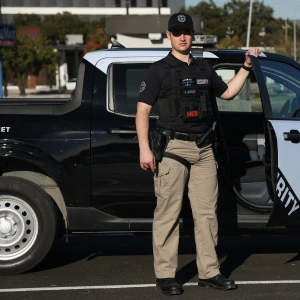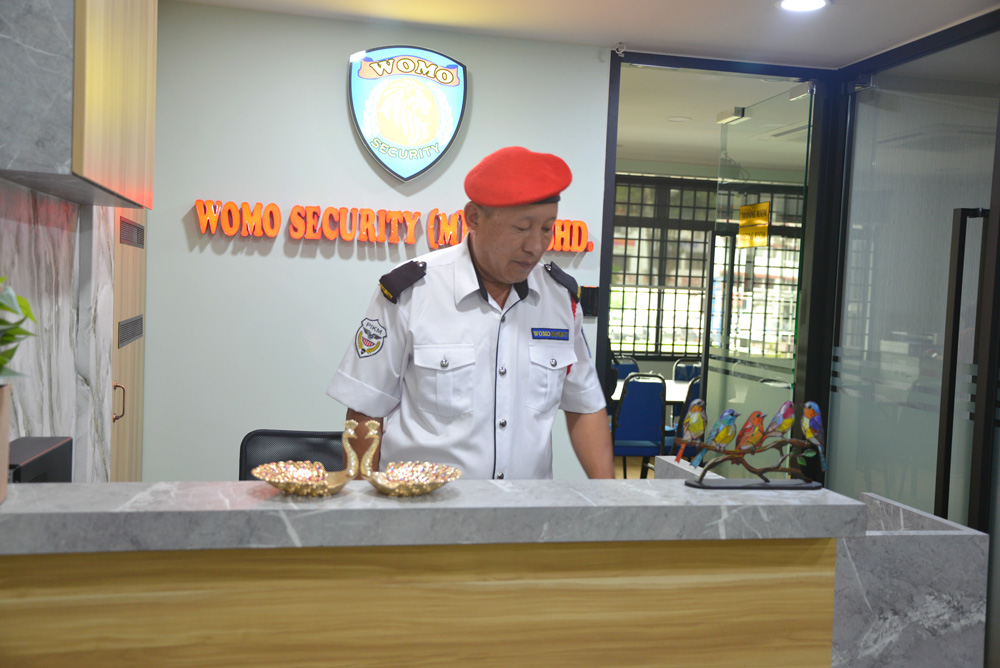
The environments of security are becoming more focused on preventing, visibility, and controlled interaction as opposed to coercion. Several of these facilities need to be secure in such a way that it fosters the peace of mind to those present in them. In this method, a security guard that is unarmed offers a formalized control by monitoring, communicating, and imposing procedures. This paper discusses the functionality of unarmed guarding, skills and the reason why this protection model has been critical in contemporary commercial, residential and public environments.
Unarmed Guarding Solutions Purpose.
Unarmed protection is more centred on deterrence and prevention rather than fighting. Offices, schools, retail areas, and residential complexes are the facilities that are often characterized by approachability. Amidst day-to-day activities, an unarmed security guard is used to bring order by watching the conduct, controlling access areas, and reporting deviations. The presence which is seen but not aggressive minimizes the occurrence and still ensures that the place remains friendly to both the occupiers and tourists.
Main Responsibilities And Day-to-Day Operations.
The day to day responsibilities include patrols, entry checks, checking of visitors and documentation of incidents. Detailing is a very crucial part in avoiding escalation. During assigned shifts, an unarmed security guard patrols the area, implements rules on the site, and reports on issues in time. Such regular practices enhance safety awareness and help to prevent small scale problems that may become bigger, in terms of operations and security concerns.
Focus on Training and Skill Development.
Training is also important in professional effectiveness, as opposed to equipment. Training usually involves de-escalation of conflicts, emergency response, communication skills, and situational awareness. With the help of these competencies, an unarmed security guard communicates without panic and on a professional level. With this training, the staff members are prepared to solve conflicts without using aggression, lead evacuations, and organize support without using force.
Position In Customer and Public Relation.
In a number of set ups, guards are required to come in contact with the employees, residents or general people. Civility and comprehensiveness take precedence over vigilance. At the center of such interactions, there is an unarmed security guard who has to strike a balance between being authoritative and approachable. This dual role facilitates collaboration, increases the adherence to the policies, and the overall perception of safety in the shared space.
Assimilation With Technology and Processes.
Unarmed guarding is common with the surveillance system and access control. Reporting tools and communication devices are digital and they help with proper documentation. Embodied into these structures, an unarmed security guard is able to employ technology to promote awareness and coordination. This blend of human monitors and technical assistance is efficient in responding and keeping a non-invasive protection stance.
Applicability in Different Environments.
The intensity of security needed in different facilities varies. Unarmed presence is usually effective in low or medium risk areas because of reduced exposure to threat. In this kind of environment, an unarmed security guard provides good protection without instilling a scary environment. This is what makes unarmed guarding best used in workplaces, schools, health institutions, and community-oriented settings.
Professional Accountability And Compliance.
The unarmed security services are provided under certain areas of legal and procedural limits. Accountability is achieved through licensing standards, conduct guidelines and reporting requirements. By complying with the rules and regulations, an unarmed security guard upholds ethical behavior and reliability of operations. Such compliance will minimize the liability issues and enhance the credibility between the facility managers, occupants and regulatory stakeholders.
Donation To Incident Prevention.
Early detection and peaceful intervention of most security incidents can help prevent them. Regular patrols, as well as close attention, prevent illegal actions. Unarmed security guard thus becomes very important during such preventive measures where they detect risks at an early stage and start responding accordingly. This proactive is used to reduce disturbance and promote balanced and well controlled settings.
Psychological Effect And perceived Safety.
Space The perception of space is a sensitive issue as it is deeply linked to emotional feelings and security. There are calm and professional guards which aid in the reassurance non-intimidation. With constant vigilance, an unarmed security guard boosts the level of assurance between occupants and visitors. Such mental confidence helps to enhance productivity, cooperation and even community comfort which serves as a reinforcement of the general efficiency of non-violent security models.
Conclusion
Unarmed guarding is a tactical compromise between security and friendliness. An unarmed security guard provides effective protection without the use of force through training, observation, communication, and enforcing the procedures. Unarmed guarding remains an important aspect in ensuring order, trust, and stability in operations of organizations as they strive to gain security solutions that are professionally oriented and at the same time offer comfort to the masses.